Introduction
Pivoting feels like admitting failure to a lot of founders — it isn’t. Knowing when to pivot business direction, before the runway runs out, is often what separates businesses that survive from ones that don’t. I’ve watched founders hang onto a dying idea way past the point where the signs were obvious to everyone else.
What a Pivot Actually Means
Quick answer: Knowing when to pivot business models comes down to watching for stagnant growth despite consistent effort, customers using your product differently than intended, or a shrinking market for your original idea.
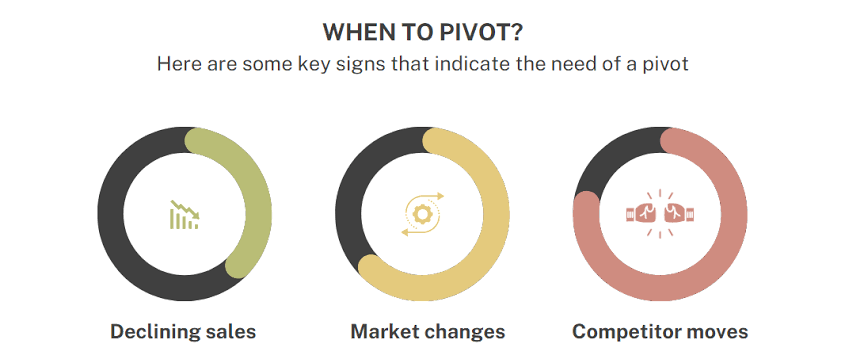
Sign 1 — Growth Has Flatlined Despite Real Effort
If you’re putting in consistent marketing and sales effort but numbers stay flat month after month, that’s not a “just push harder” problem — it’s often a signal the offer itself needs rethinking.
Sign 2 — Customers Use Your Product Differently Than Intended
- Customers repurposing a feature you considered secondary
- Unexpected customer segments showing more interest than your original target
- Support requests clustering around a use case you didn’t plan for
Sign 3 — Customer Acquisition Cost Keeps Rising
Picture spending more and more on ads just to maintain the same number of new customers each month — that rising cost curve often signals the market’s telling you something.
Sign 4 — The Market Itself Is Shrinking
Sometimes the problem isn’t your execution — it’s that the underlying market is genuinely shrinking due to shifting habits, technology, or regulation.
Sign 5 — Your Team’s Energy Feels Forced, Not Genuine
Has this ever happened to you — pushing a product update nobody’s excited about, including your own team? That quiet lack of internal enthusiasm is worth paying attention to.
How to Pivot Without Starting From Zero
- Keep your existing customer base’s core problem in focus
- Test the new direction on a small scale before fully committing
- Talk to existing customers about the shift before launching it widely
- Give the pivot a defined testing period, not an indefinite one
Common Pivot Mistakes
- Waiting too long, until cash reserves are nearly gone
- Pivoting reactively without testing the new direction first
- Ignoring existing loyal customers during the transition
- Changing everything at once instead of a focused shift
[link to related guide about why startups fail here]
FAQ
How do I know if I should pivot or just push harder? If effort is consistent but results stay flat for several months, it’s usually a signal to reconsider the model itself.
Is pivoting a sign of failure? No — many successful companies pivoted early from their original idea into what eventually worked.
How do I pivot without losing existing customers? Keep the core problem you solve for them in focus, and communicate the shift clearly and early.
How long should I test a new direction before fully committing? A defined window, often 2-3 months, gives enough signal without dragging out uncertainty indefinitely.
What’s the biggest risk of pivoting too late? Running out of cash or team morale before you’re able to test and validate the new direction properly.
Conclusion
Pivoting isn’t giving up — it’s responding to real signals instead of ignoring them out of stubbornness or fear. If two or more of these signs sound familiar right now, it’s worth a serious, honest conversation with your team this week.