A familiar company vehicle can leave an impression long before a customer visits a website or speaks to a member of the team. Think about the delivery van you see around your neighborhood every week, or the service truck parked outside a house on your way to work. After a while, its colors and logo become recognizable. You may not remember exactly when you first noticed it, but the business starts to feel familiar.
That is one of the practical strengths of vehicle branding. It takes an ordinary part of daily business—the journey between jobs, deliveries, and appointments—and turns it into an opportunity to be seen. When the design is thoughtful, a vehicle can communicate professionalism, help customers identify a company, and make a brand easier to remember.
Of course, good graphics are not simply a matter of putting a logo on a door. The design needs to suit the vehicle, the audience, and the work being done. A delivery fleet has different needs from a mobile restaurant or a public safety vehicle, and those differences should guide every decision.
Making a Fleet Look Like One Connected Brand
For a business with several vehicles, consistency can make a noticeable difference. Customers might encounter one van on Monday and another truck later in the week. If both carry the same visual identity, the company becomes easier to recognize across different locations and situations.
Well-planned fleet graphics help create that connection. Matching colors, logo placement, typography, and key messages make individual vehicles feel like part of a larger operation. This can be particularly useful for businesses in plumbing, construction, landscaping, delivery, cleaning, and other services where vehicles are regularly seen in public.
Consistency does not mean every vehicle needs exactly the same layout. A compact van has less usable space than a large box truck, and the placement of doors, windows, and panels varies between models. A strong design system allows the graphics to adapt without losing the brand’s identity.
It is worth considering how the fleet looks as a whole, too. If the vehicles are often parked together at a work site or warehouse, their shared appearance can reinforce the impression of an organized business. That may seem like a small detail, but customers often notice these things, even when they cannot quite explain why a company feels professional.
Keeping the Message Simple and Easy to Read
A vehicle is usually viewed in motion, from a distance, or for just a few seconds. That makes readability more important than decorative detail. A complicated design might look impressive on a computer, yet become confusing when the vehicle is moving through traffic.
Start with the essentials. The company name should be easy to identify, and the main service should be clear enough that someone can understand it quickly. Contact information can be included, but it should not compete with the primary message. If the design tries to explain every service, list every location, and include several slogans, the most important information may get lost.
Color contrast matters as well. Dark lettering on a suitable light background—or the reverse—can improve visibility. Fonts should be legible rather than overly stylized, especially for phone numbers and other details that customers may need to remember. Designers should also consider how the graphics look in daylight, shade, and less-than-perfect weather.
A useful test is to step back from the design and give yourself only a moment to look at it. What do you notice first? Can you tell what the business does? If the answer is unclear, simplifying the layout may improve it more than adding another visual element.
Helping Food Businesses Stand Out on Busy Streets
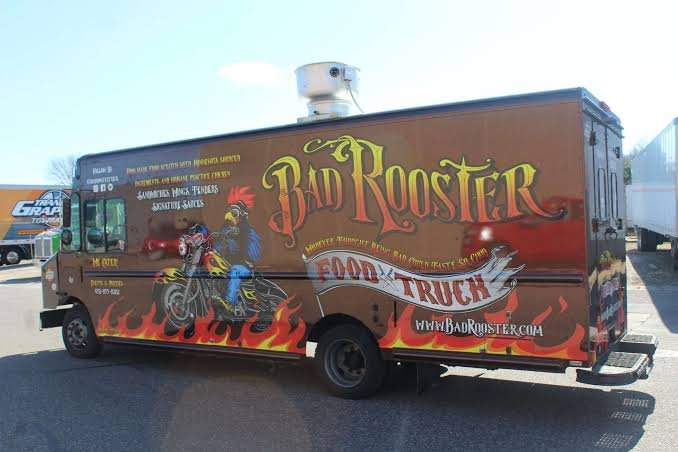
Food trucks operate in a competitive environment. They may park near other vendors, attend community events, visit office districts, or move between different neighborhoods. Customers often decide where to order based on a quick look, so the vehicle itself can play an important role in attracting attention.
Effective food truck wraps should reflect the food, atmosphere, and personality of the business. A truck selling fresh tacos might use lively colors and bold imagery, while a coffee trailer could benefit from a warmer, more understated style. The goal is to make the concept recognizable without overwhelming people with information.
Menu communication needs some thought. A wrap can feature signature items or a short description, but it should not try to replace a full menu board. Small text and long lists are difficult to read from a queue or sidewalk. Instead, the graphics can spark interest, while a separate menu provides the details customers need to make an order.
Practical use should influence the design, too. Serving windows, doors, handles, ventilation panels, and areas exposed to heat or frequent cleaning all affect how the artwork can be applied. A designer who understands the truck’s layout can help avoid awkward breaks in important images or lettering.
For food businesses, appearance also sets expectations. Clean, well-maintained graphics can support the impression that the operation takes care with its presentation. They cannot replace food safety or good service, naturally, but they can help create a welcoming first impression.
Designing for Emergency and Public Safety Vehicles
Emergency vehicles have a different purpose from ordinary commercial fleets. Their graphics must support clear identification and, where required, visibility under challenging conditions. The design is not just about brand recognition; it can also contribute to safety and help members of the public understand the vehicle’s role.
Professionally planned emergency vehicle wraps should account for applicable regulations, agency standards, reflective materials, and the placement of essential markings. Police, fire, ambulance, and other response vehicles may have specific requirements that determine which colors, symbols, words, and reflective elements can be used. Those rules should be checked before design work is finalized.
Visibility should remain a priority. Important markings need to be recognizable from appropriate viewing angles, and the graphics should not interfere with lights, windows, equipment compartments, or other functional features. Reflective materials may be necessary for some applications, but the correct specifications depend on the vehicle type and local requirements.
Durability is important because emergency vehicles may be used in demanding conditions and cleaned frequently. The chosen materials and installation method should suit the vehicle’s workload. A wrap that looks good at delivery but deteriorates quickly can create extra costs and require the vehicle to be taken out of service for repairs.
Choosing Materials and an Experienced Installer
Even the best artwork depends on proper execution. The vehicle’s paint condition, surface preparation, material selection, and installation technique all affect how well the finished graphics perform. Rushing this stage can lead to lifting edges, bubbles, uneven finishes, or premature wear.
Before committing to a project, ask the provider about material options, expected durability, cleaning recommendations, warranty terms, and installation time. It is also sensible to review examples of completed work on vehicles similar to yours. Photos of a design on a flat screen are helpful, but real installations reveal how the graphics work around curves, seams, and vehicle hardware.
A clear proofing process can prevent costly mistakes. Check spelling, phone numbers, website addresses, colors, and logo proportions before approving production. For a fleet, confirm that the design specifications will remain consistent across different vehicle sizes.
Treating Vehicle Graphics as a Long-Term Investment
The value of vehicle branding is not always easy to measure, but businesses can still look for useful signals. Ask new customers how they heard about the company, track inquiries that mention seeing a vehicle, and review whether the graphics remain accurate as services change. These small steps can help show whether the design is supporting wider marketing efforts.
Vehicle branding works best when the graphics reflect the business honestly and remain easy to understand. Whether a company manages a fleet, serves meals from a mobile kitchen, or operates vehicles for emergency response, the design should match the job it needs to do.
A vehicle may spend much of its day moving between destinations, but it can still communicate something along the way. With clear messaging, suitable materials, and careful installation, those everyday journeys can help build recognition and create a more consistent identity—one that people remember when they need the service.