Introduction
Career advice often oversimplifies this choice into “corporate is stable, startups are exciting.” The real corporate vs startup culture difference runs much deeper, affecting daily work style, growth pace, and even how decisions get made.
Why This Comparison Matters for Career Decisions
Quick answer: The core corporate vs startup culture difference comes down to structure and pace — corporates offer defined processes and stability, while startups offer faster growth, broader responsibility, but less predictability.
Structure and Process
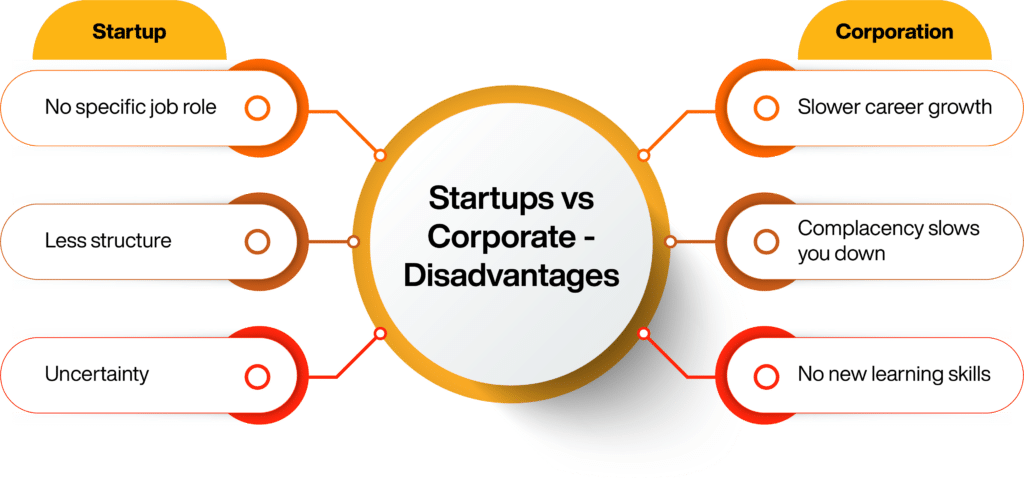
Corporates typically have well-defined processes, approval chains, and role boundaries. Startups often figure out processes as they go, with roles overlapping far more fluidly.
Pace of Decision-Making
- Corporate: decisions often require multiple approvals, taking longer but reducing risk
- Startup: decisions happen faster, with less bureaucracy but higher individual responsibility
Job Security and Stability
Corporates generally offer more predictable job security and structured benefits. Startups carry more risk, including the real possibility of the company not surviving long-term.
Learning and Skill Development
Picture two employees a year in — the corporate employee has deep expertise in one narrow function, while the startup employee has hands-on experience across marketing, operations, and product simultaneously.
Compensation Structures
Corporates typically offer more predictable salaries and structured benefits. Startups often offer lower base pay balanced with equity, which carries both higher potential upside and higher risk.
Work-Life Boundaries
I’ve noticed corporate roles generally have clearer boundaries around working hours, while startup roles often blur into evenings and weekends, especially during growth phases.
Which Culture Fits Which Personality
- Corporate suits those who value stability, deep specialization, and structured growth paths
- Startups suit those comfortable with ambiguity, wanting broad exposure, and higher risk tolerance
How to Decide Between the Two
- Assess your personal risk tolerance honestly
- Consider what stage of skill-building you’re currently at
- Think about which environment genuinely energizes versus drains you
[link to related guide about corporate job interview tips here]
FAQ
Is startup work culture always more stressful than corporate? Often yes, due to less structure and higher individual responsibility, though this varies by specific company and role.
Which offers better long-term career growth, corporate or startup? Both can, but corporate offers structured specialization while startups offer broader, faster-paced exposure.
Do startups always pay less than corporate jobs? Often in base salary, yes, though equity compensation can offset this if the startup succeeds.
Can someone successfully move between corporate and startup environments? Yes, though it often requires adjusting to different paces, structures, and expectations significantly.
Which culture is better for someone early in their career? It depends on personal goals — corporates offer structured mentorship, while startups offer faster, broader hands-on learning.
Conclusion
Neither culture is objectively better — the right choice depends on your current goals, risk tolerance, and what kind of growth you’re seeking right now. Reflect honestly on which environment matches your current life stage before your next career decision.