Introduction
Walk into any market — skincare, coffee shops, SaaS tools — and you’ll find dozens of nearly identical options. What separates the ones people remember from the ones that blur together is brand positioning. It’s not about being the loudest; it’s about being the clearest.
What Brand Positioning Actually Means
Quick answer: Brand positioning is the specific space a company occupies in a customer’s mind relative to competitors, defined by what makes it meaningfully different, not just what it sells.
Why Most Businesses Get This Wrong
A lot of brands try to appeal to absolutely everyone, which ironically makes them memorable to no one. Strong brand positioning often means deliberately narrowing your appeal to stand out sharper for the right audience.
Step 1: Identify What You’re Actually Competing Against
You’re not just competing with businesses selling the same product — you’re competing for attention against every alternative solving a similar problem, even indirectly. A meal kit service competes with restaurants, groceries, and cooking apps, not just other meal kits.
Step 2: Find Your Genuine Point of Difference
Quick answer: Effective brand positioning starts with identifying one authentic advantage — price, quality, speed, values, or experience — that your business can credibly claim and competitors can’t easily copy.
- Price positioning: cheapest credible option in the category
- Quality positioning: premium, best-in-class experience
- Niche positioning: serving one specific audience exceptionally well
- Values positioning: sustainability, local sourcing, ethical practices
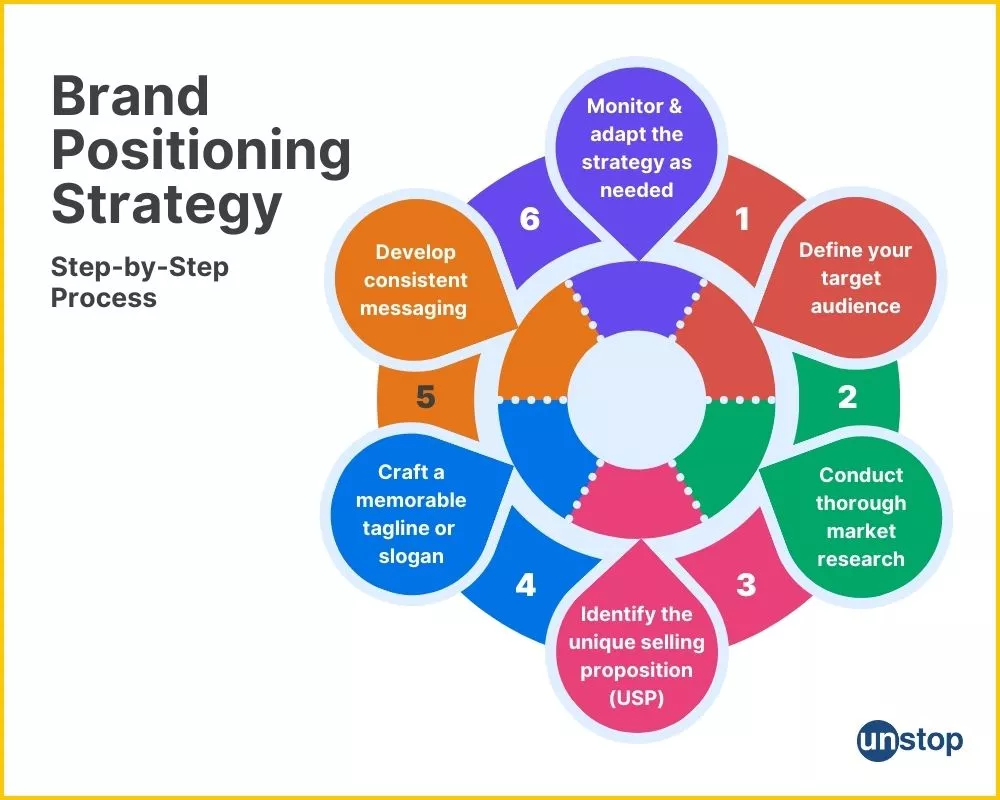
Step 3: Write a Positioning Statement
A simple format works well: “For [target audience], [brand] is the [category] that [key differentiator], unlike [main alternative].” It sounds simple, but forcing yourself to fill this in reveals gaps in your current positioning fast.
Step 4: Make Positioning Visible in Everything
Positioning isn’t just a tagline — it shows up in your pricing, your customer service tone, your packaging, even your social media captions. Inconsistency between what you claim and what customers actually experience kills trust quickly.
Picture a brand claiming “premium quality” while shipping in flimsy packaging with slow, unhelpful customer support — the positioning collapses the moment reality contradicts the claim.
[link to related guide about content marketing strategy here]
Step 5: Revisit Positioning as the Market Shifts
Quick answer: Brand positioning isn’t permanent — as competitors enter or customer expectations shift, businesses need to periodically reassess whether their original differentiation still holds up.
A Real Example Worth Studying
Look at how budget airlines position around “no-frills, low-cost travel” versus full-service carriers positioning around comfort and experience. Neither tries to be everything — each owns a specific, clear space in the traveler’s mind.
My Honest Take
I think a lot of small businesses avoid strong positioning out of fear of alienating potential customers. But trying to appeal to everyone usually means standing out to no one. A sharper, narrower position almost always outperforms a vague, broad one.
FAQ
What is the difference between branding and brand positioning? Branding covers overall identity — logo, voice, visuals — while brand positioning specifically defines your unique place relative to competitors.
How do I find my brand’s unique positioning? Identify a genuine strength competitors can’t easily replicate, then build messaging clearly around that single advantage.
Can small businesses have strong brand positioning? Yes, often more easily than large companies, since small businesses can serve a specific niche precisely.
Should brand positioning change over time? Yes, periodically reassessing positioning as the market and competitors evolve keeps it relevant.
What’s an example of weak brand positioning? Claiming to be “the best” at everything without a specific, credible differentiator that customers can actually recognize.
Conclusion
Strong brand positioning isn’t about shouting louder than competitors — it’s about claiming a clear, specific space that’s genuinely yours. Identify your real point of difference, write it into a simple positioning statement, and make sure it shows up consistently across every customer touchpoint. Review your current positioning today — if you can’t fill in that simple statement clearly, that’s exactly where to start.
Suggested alt text: “Brand positioning strategy board showing differentiation against competitors”